Storage for Spare Parts in Saudi Arabia: A 2026 Guide
Storage for spare parts is one of the most overlooked profit levers in Saudi Arabia’s industrial and automotive sectors. In 2026, with supply chains still unpredictable and lead times stretching, the businesses that win are the ones that can put their hands on the right part instantly. Downtime is expensive, and disorganized parts inventory is often the hidden cause.
This guide covers how to store spare parts properly, protect them from Saudi Arabia’s harsh climate, and organize them so retrieval takes seconds instead of hours. Whether you run a workshop, a fleet, or a factory, a disciplined parts store keeps your operation moving.
Why Proper Spare Parts Storage Pays Off
A spare part is only useful if it works when you need it and if you can find it. Heat, humidity, dust, and poor organization quietly destroy value in most parts stores. Rubber perishes, metal corrodes, seals dry out, and electronics fail after months in the wrong environment.
Dedicated Storage for Spare Parts solves this with clean, climate-aware space and clear organization. The payoff is faster repairs, less waste, and fewer emergency reorders at premium prices.
Common Spare Parts Storage Mistakes
- Storing rubber and plastic parts in hot, uncontrolled space
- Leaving metal components exposed to humidity and corrosion
- Mixing fast-moving and rare parts on the same shelf
- No labeling system, so staff waste time searching
- Stacking heavy parts on fragile ones
- Ignoring shelf life on adhesives, batteries, and lubricants
Matching Parts to the Right Storage Conditions
Not all parts survive the same environment. Some tolerate heat, others degrade fast. The table below is a practical starting point for organizing your inventory by need.
| Part Type | Storage Need | Main Risk |
|---|---|---|
| Rubber seals and hoses | Cool, dry, out of light | Cracking and perishing |
| Metal components | Low humidity | Rust and corrosion |
| Electronics and sensors | Stable temperature, anti-static | Heat and moisture damage |
| Adhesives and lubricants | Controlled temperature | Expiry and separation |
| Filters and belts | Clean, dry shelving | Dust and deformation |
Building a Fast, Organized Parts Store
Organization turns a warehouse of chaos into a retrieval machine. Start with a simple, consistent numbering system and a fixed home for every part. When staff know exactly where item number goes, picking becomes fast and errors fall.
Modern parts management increasingly relies on data. Guidance from the Occupational Safety and Health Administration on warehouse safety also reinforces that clear layout, safe stacking, and clean aisles reduce both accidents and lost time. A safe store is usually an efficient one.
A Simple System That Works
- Assign each part a unique code and a fixed shelf location.
- Group parts by category, then by movement speed.
- Place fast movers near the entrance, rare parts deeper in.
- Track quantities so reorders trigger before stockouts.
- Rotate stock so older parts, especially dated ones, ship first.
Climate Control and Chilled Options for Sensitive Parts
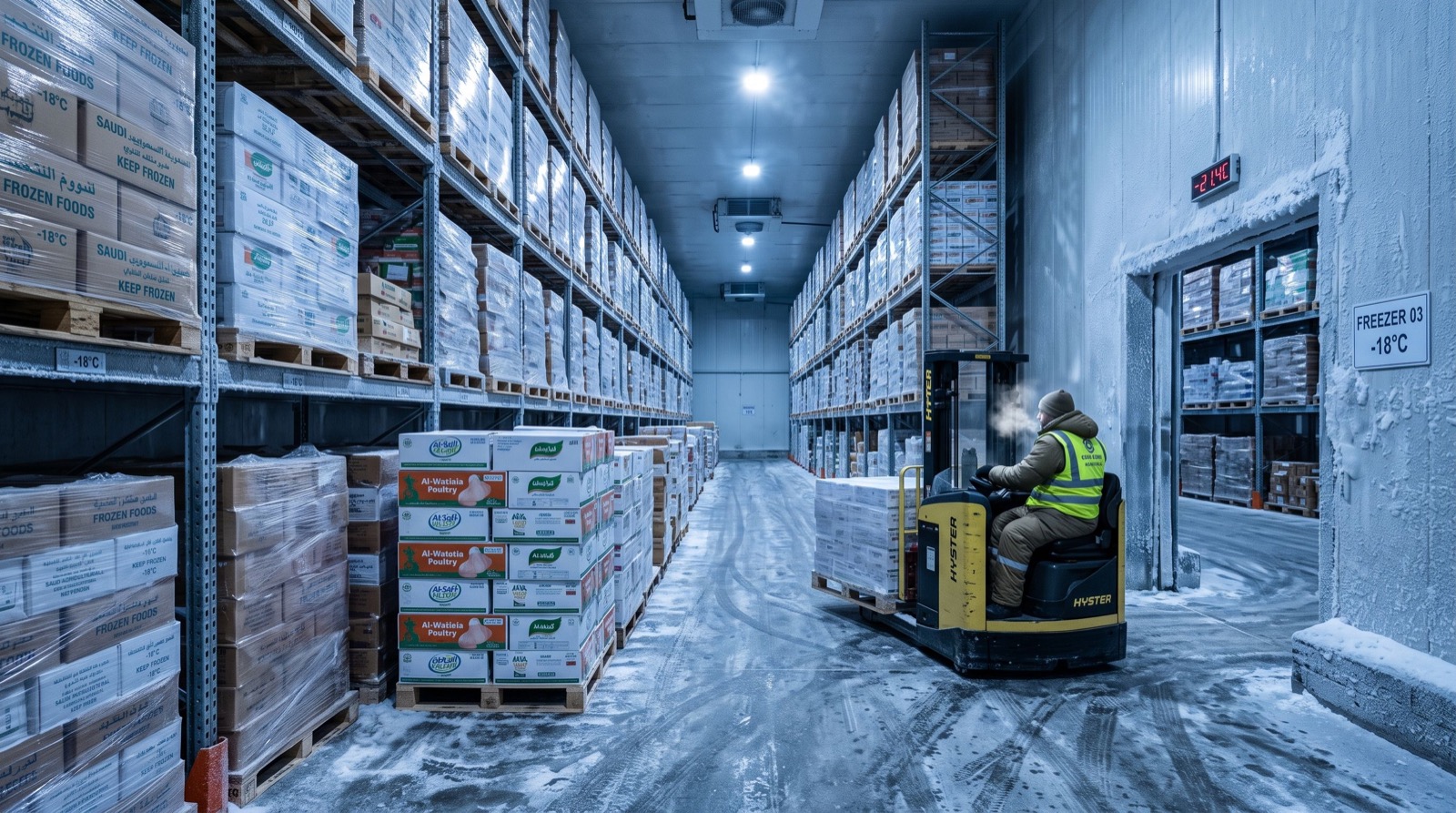
Some components need more than a clean shelf. Adhesives, certain sealants, batteries, and precision electronics last far longer in controlled cool conditions. Pairing your main parts store with reliable Chilled Storage extends the usable life of these sensitive items and prevents the costly failures that come from heat degradation.
This matters most in Saudi Arabia, where summer heat can push uncontrolled storage well past safe limits. Splitting your inventory into ambient and cool zones protects value without over-cooling parts that do not need it.
An Insight Worth Applying
The biggest hidden cost in most parts stores is not the missing part. It is the part you already own but cannot find, so you reorder it. Businesses that audit their inventory quarterly and enforce fixed locations routinely discover thousands of riyals in duplicate stock. Organization is not overhead. It is savings.
Choosing the Right Storage Partner
The right facility gives you climate options, security, flexible space, and fast access. Work with reputable service experts who understand both storage conditions and inventory flow, and who can grow with your parts catalog as it expands.
Ask about humidity monitoring, insurance, and access hours before you commit. A partner that logs conditions and offers month-to-month flexibility protects both your parts and your budget.
Inventory Tracking That Prevents Downtime
The whole point of a spare parts store is availability. When a machine or vehicle goes down, the right part must be on hand immediately. That reliability comes from tracking, not luck. Knowing exactly what you hold, where it sits, and when to reorder is the difference between a quick fix and days of costly idle equipment.
Set minimum stock levels for critical parts and reorder before you hit zero. For high-value or slow-moving items, track usage history so you avoid both stockouts and overstock. A simple spreadsheet is enough to start, though barcode or app-based systems pay off quickly as your catalog grows.
Signs Your Parts Tracking Needs Work
- Frequent emergency orders at premium prices
- Discovering duplicate stock you forgot you owned
- Repairs delayed while staff hunt for parts
- Expired adhesives or dead batteries found on shelves
- No clear reorder point for critical components
Security and Value Protection for Parts
Spare parts represent real capital, and some are valuable enough to attract theft. A proper storage facility protects that investment with controlled access, surveillance, and insurance options. This matters most for high-value electronics, specialized components, and rare items that are hard to replace.
Beyond theft, physical protection prevents accidental damage. Safe stacking, sturdy shelving, and clear aisles stop parts from being crushed, dropped, or lost. When your inventory is both secure and organized, you protect its full value from the moment it arrives until the day it is fitted.
- Store high-value parts in access-controlled areas.
- Confirm insurance coverage for your inventory value.
- Use rated shelving to prevent crushing and collapse.
- Keep aisles clear for safe, damage-free handling.
Frequently Asked Questions
How should spare parts be stored to prevent damage?
Store parts in clean, dry, climate-appropriate space. Keep rubber and electronics cool and away from humidity, protect metal from moisture, and give sensitive items like adhesives controlled temperatures to prevent degradation.
Do spare parts need climate-controlled storage?
Many do. Rubber, electronics, adhesives, and batteries degrade in heat and humidity, so they benefit from controlled or chilled storage. Durable metal parts can often sit in low-humidity ambient space instead.
How can I organize a spare parts store efficiently?
Assign every part a unique code and fixed shelf location, group by category and movement speed, and place fast movers near the entrance. Track quantities so you reorder before stockouts and audit inventory regularly.
Why do spare parts stores lose money?
The most common cause is duplicate ordering because staff cannot find parts they already own. Poor labeling, heat damage, and expired stock also drain value. Fixed locations and regular audits solve most of these issues.
Conclusion
Effective storage for spare parts protects your inventory, speeds up repairs, and cuts hidden waste across your operation in 2026. Match parts to the right conditions, organize with fixed locations, and use chilled space for sensitive items. Get spare parts storage right and downtime shrinks while your margins grow. Partner with a trusted storage provider today and turn your parts store into a genuine competitive edge.